From Individual Equipment to Complete Process Plants
YPT Process Equipment Factory
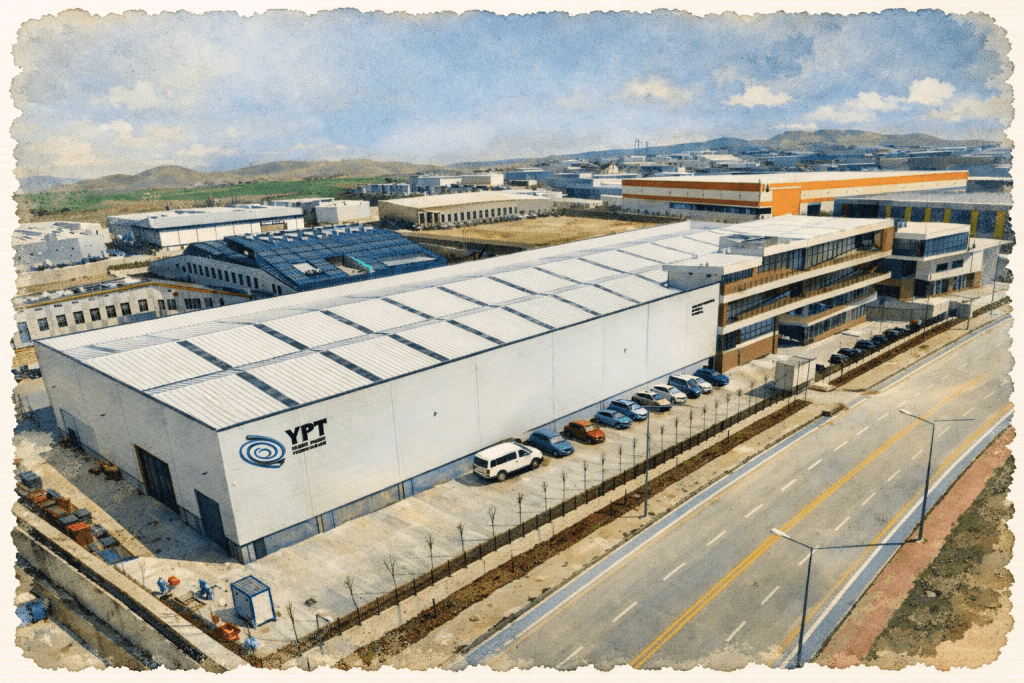
YPT Factory is the production backbone of YPT’s mineral processing business, where engineering design, process knowledge, metallurgical understanding, fabrication, assembly, and quality control are brought together within one industrial structure.
The factory supports the manufacture of equipment, modules, and plant components used across mineral processing applications, from ore preparation and enrichment to dewatering and recovery.
By keeping engineering and production closely connected, YPT strengthens control over build quality, inspection discipline, and dispatch readiness.
This integrated manufacturing approach supports reliable project execution from design release to installation and commissioning.
Complex Design
Material Integrity
Heavy performance
Speed, flexibility
Precision Fabrication, Proven Performance
Manufacturing Capabilities
YPT Factory is equipped to carry out the full range of fabrication and assembly activities required for mineral processing plant construction, from heavy structural welding to precision machining, surface treatment, final assembly, and testing. Production is managed through YPT’s Integrated Management System, with manufacturing discipline linked to ISO 9001, ISO 3834-2, and ISO 1090 requirements. This structure supports traceability, inspection control, and repeatable production quality across different equipment families. The result is a manufacturing environment built not only for output, but also for durability, fit, and long-term operating performance.
Strength Forged in Steel
Fabrication and Welding Workshops
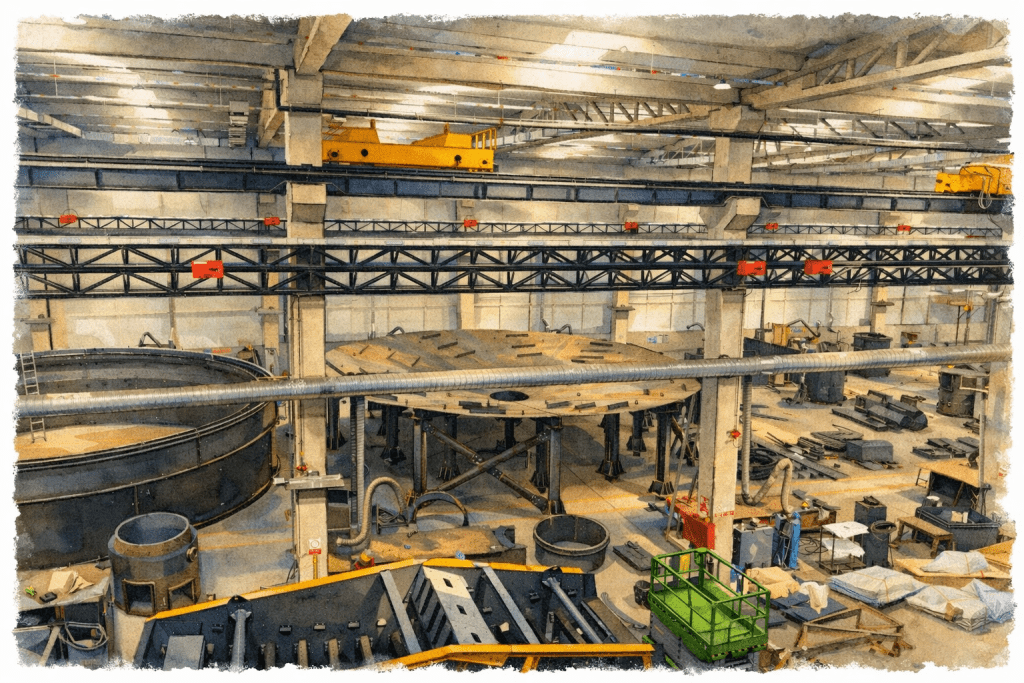
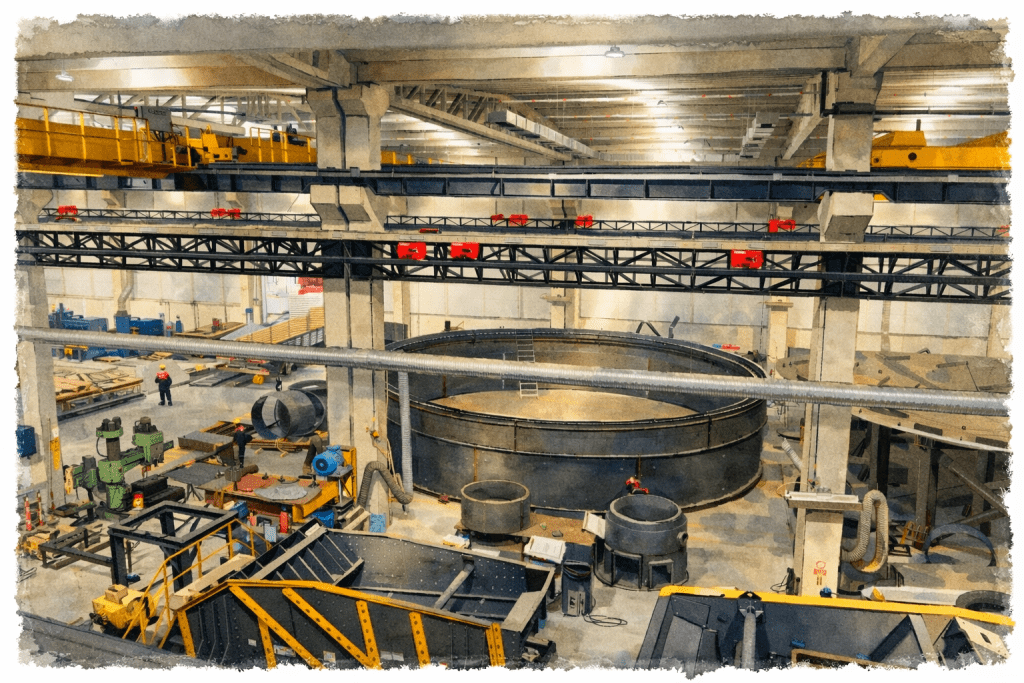
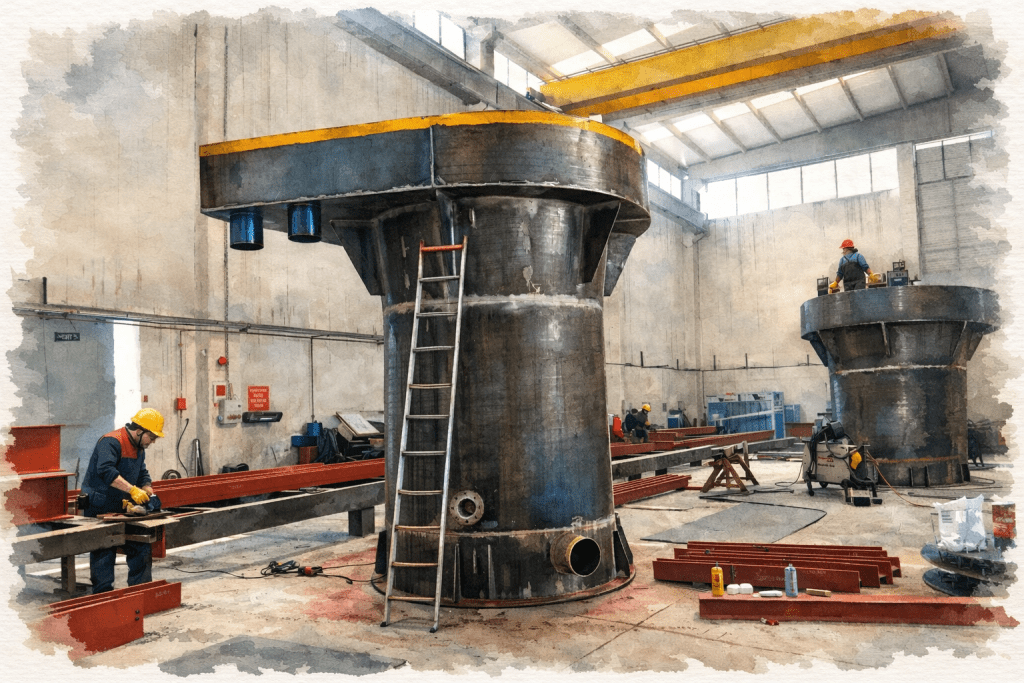
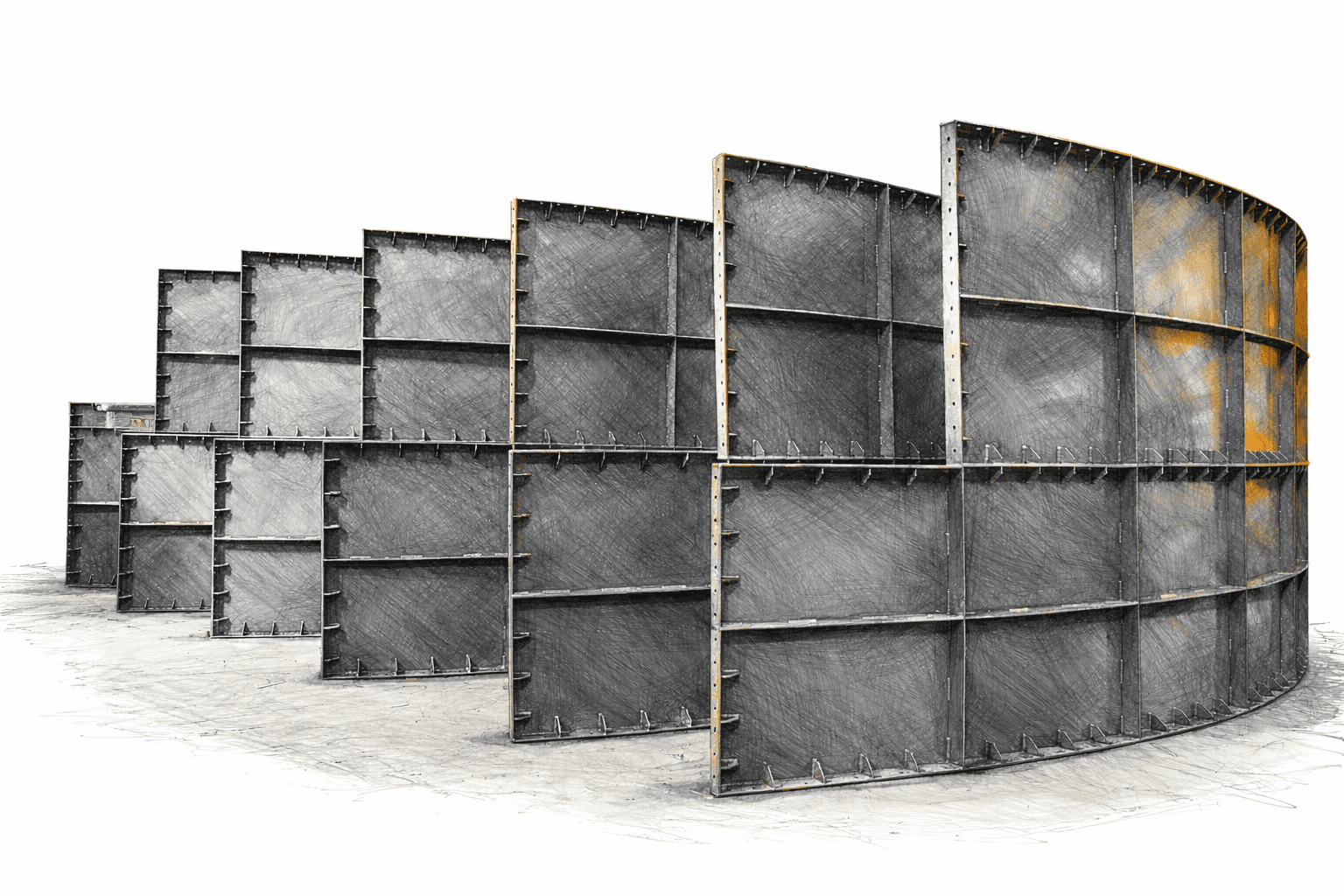
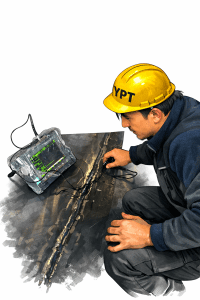
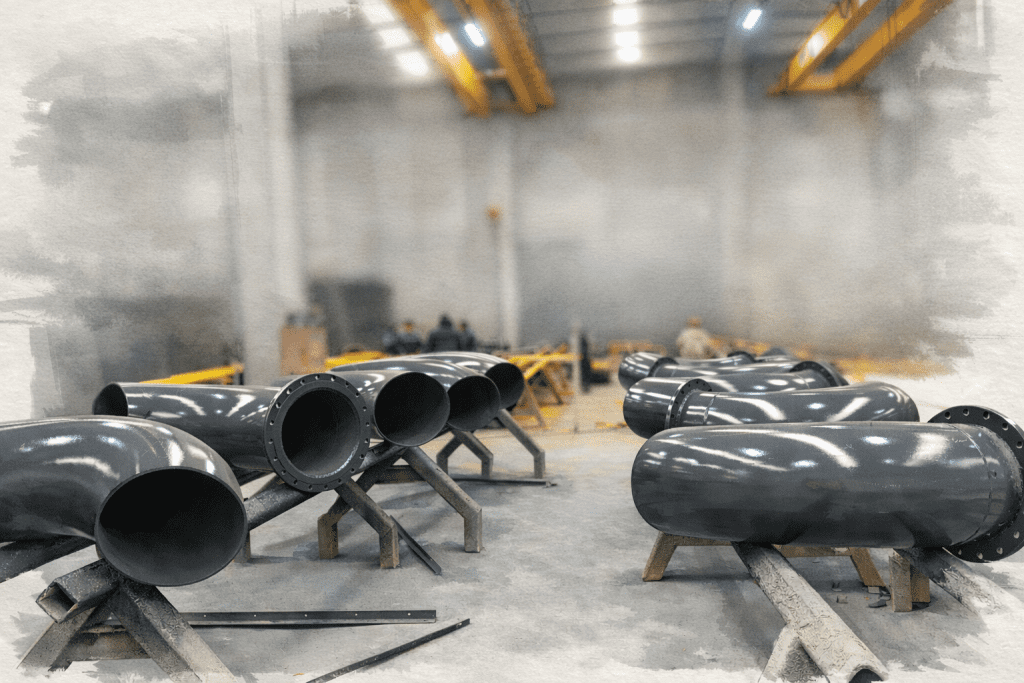
The fabrication halls are designed for heavy-duty work involving thick plates and large steel structures used in feeders, tanks, filters, frames, and plant components. Certified welders work under qualified WPS and PQR documentation, and welding is carried out using SMAW, GMAW, SAW, and GTAW according to material type and structural requirement. Weld integrity is supported by NDT practices including MT, PT, and UT. Raw materials, consumables, weld maps, and related records are maintained within the factory’s quality documentation structure to support full traceability.
Every Micron Matters
Machining and Component Manufacturing
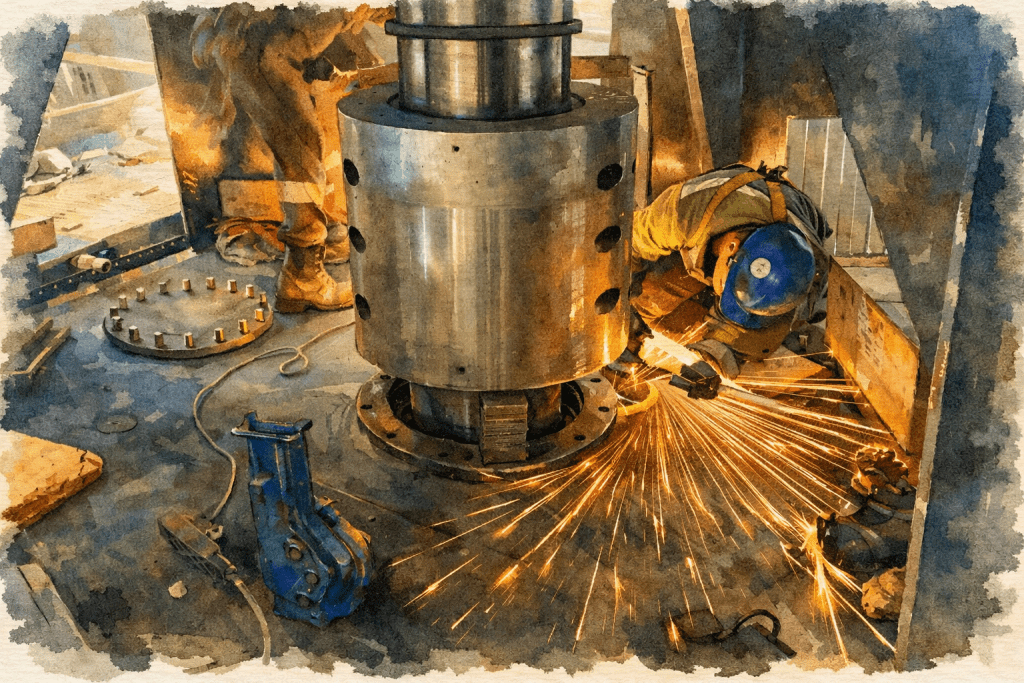
The machining section supports the precise finishing of shafts, impellers, housing flanges, sealing surfaces, and other critical mechanical interfaces. CNC and conventional lathes, milling machines, and drill presses are used to achieve the dimensional accuracy required for slurry handling and mineral separation equipment. Dynamic balancing, surface finishing, and dimensional verification form part of standard quality practice. This machining capability helps protect fit, alignment, and operating reliability in service.
Protection Beyond Performance
Surface Treatment and Coating
Fabricated equipment passes through a dedicated surface treatment and coating line developed for aggressive mining and mineral processing environments. Surface preparation may include sandblasting, priming, and multi-layer paint systems, with optional epoxy or polyurethane coating selection depending on service medium and process conditions. Surface roughness and paint thickness are measured and documented as part of release control. This approach supports corrosion resistance, service life, and long-term equipment durability.
Assemble. Test. Deliver Confidence
Assembly and Testing
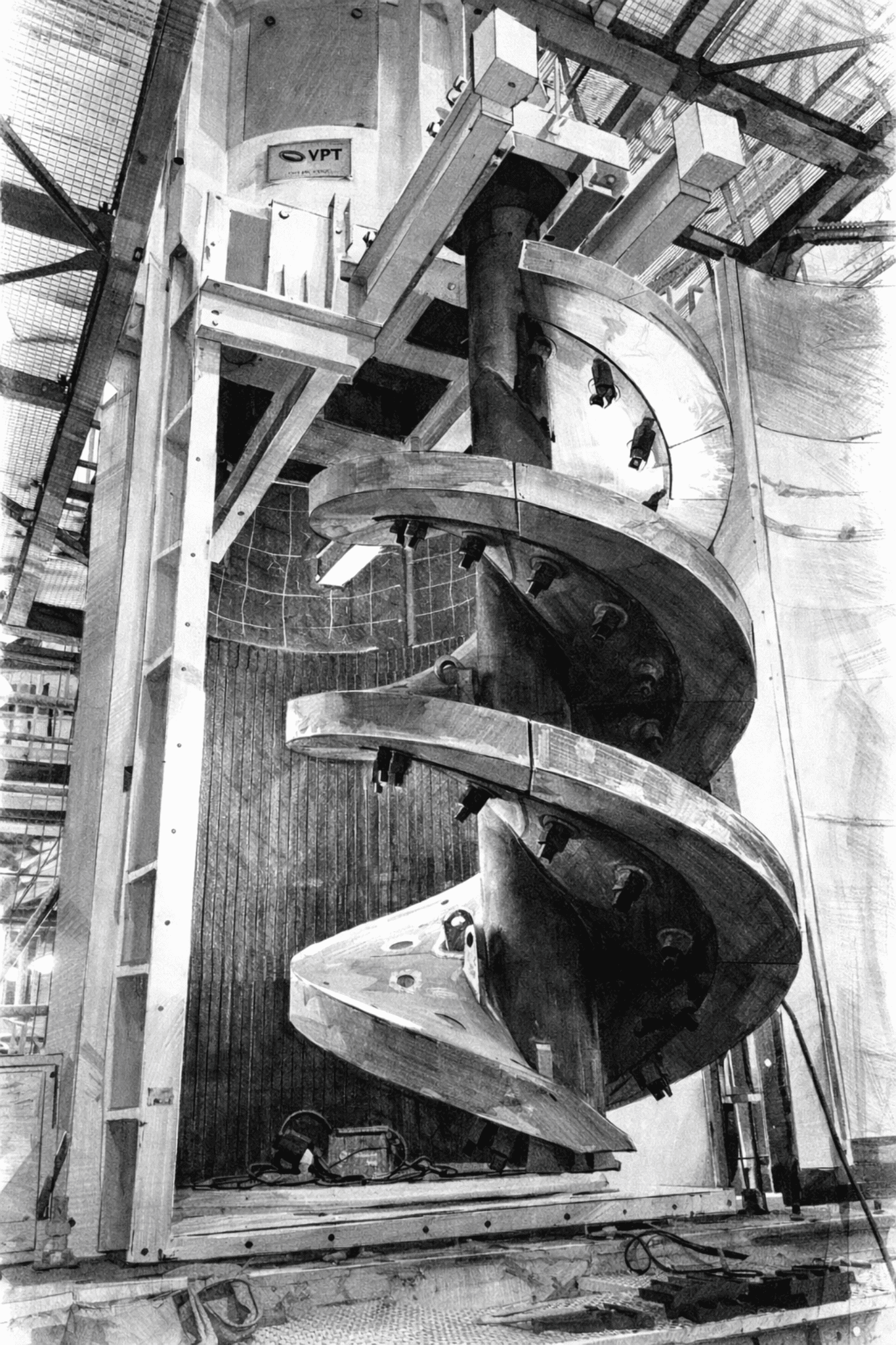
The assembly area brings together mechanical, hydraulic, and electrical components to form complete process units and plant-ready equipment packages. Functional alignment, dry-run verification, and hydraulic or pneumatic pressure testing are performed where required by the equipment scope. Assembled machines are subjected to Factory Acceptance Test procedures under the supervision of YPT engineers and client representatives. This final stage helps confirm both design compliance and operational readiness before dispatch.
From Individual Equipment to Complete Process Plants
Manufacturing Range
YPT Factory manufactures equipment and fabricated assemblies used across the mineral processing chain. The production scope covers material handling, size reduction, size control, ore enrichment, concentrate conditioning, recovery systems, and structural fabrication for plant integration. Equipment designs are developed from YPT’s System and Detail Engineering outputs so that production remains closely aligned with process intent, plant layout, and installation requirements. In addition to standalone equipment, the factory also supports integrated plant packages and project-specific fabrication scope.
Certified Quality, Verified Performance
Quality Control & Certification
Quality at YPT Factory is controlled at every stage through an Integrated Quality Management System aligned with ISO 9001 and ISO 3834-2. Material certificates, heat numbers, and weld maps support full traceability from raw material intake to final release. Finished products undergo dimensional verification, pressure testing, coating inspection, and NDT procedures according to equipment requirements. Exported equipment is prepared with CE marking and Technical File documentation in line with applicable EU Machinery Directives, while internal and external audits are conducted under YPT’s QMS and HSE supervision.
Designed for Productivity and Precision.
Factory Infrastructure
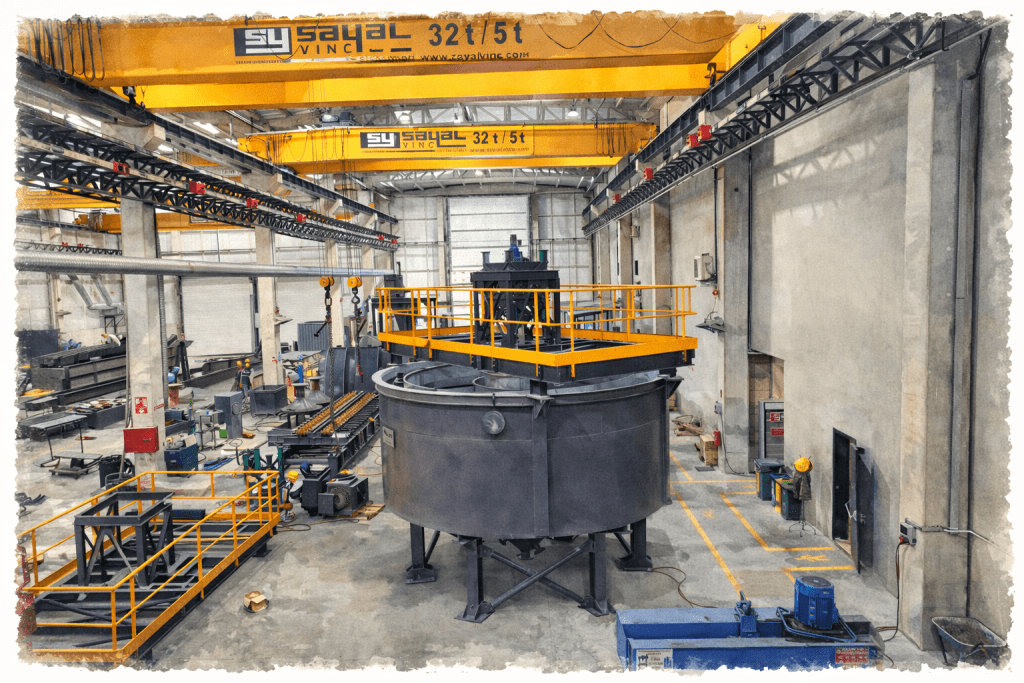
YPT Factory is a purpose-built heavy manufacturing facility arranged to support efficient production flow, safe handling, and close coordination between workshop and engineering teams. The site includes more than 8,000 m² of indoor production space and an additional 12,000 m² open yard for handling, storage, and fabrication support. Overhead cranes in the 10 t to 25 t range and heavy-duty flooring support the manufacture of large tanks, structures, and process equipment. Dedicated zones for raw-material storage, pre-fabrication, machining, assembly, and painting help maintain workflow discipline across the plant. On-site engineering and quality control offices allow direct coordination with production, while utility and safety systems are designed in line with ISO 45001 standards.
Innovating Mineral Processing for Tomorrow
Research & Development (R&D)
Research and development activities are carried out jointly with YPT’s engineering division and the YPT Mineral Processing Academy. The factory hosts pilot-scale test equipment used to optimize process units such as DMS plants, leach reactors, and filtration systems. Feedback from operating projects is used to improve designs, materials, and energy efficiency across the product range. Development work also extends toward automation, digital instrumentation, and predictive maintenance technologies.

Crafted by Engineers, Built by Experts.
Human Expertise
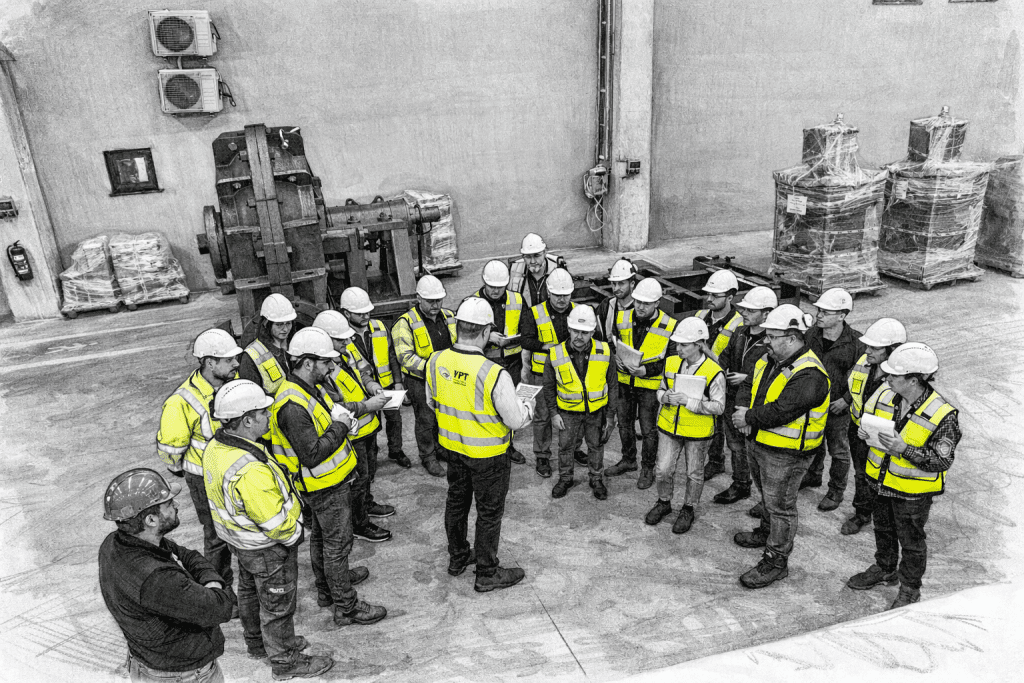
The strength of YPT Factory lies in the experience and coordination of its people. Production engineers, certified welders, machinists, inspectors, and supervisors work together under a shared quality and delivery discipline. Personnel development is supported through YPT Academy programs covering safety, welding techniques, process awareness, and quality documentation. This combination of craftsmanship, technical oversight, and continuous training helps maintain consistent production standards across the factory.
Control. Consistency. Competitiveness
Strategic Advantages of In-House Manufacturing
Owning and operating a dedicated manufacturing facility gives YPT stronger control over execution within its EPC model. Design, fabrication, and delivery schedules can be coordinated more directly, while unified quality standards are maintained from engineering release to final dispatch. Project-specific and client-driven revisions can be addressed faster, and dependence on third-party suppliers is reduced. Close communication between design engineers and production teams also supports better manufacturing decisions and more efficient project response.
One System, One Standard, One YPT
Integration with EPC and QMS Systems
YPT Factory operates as an integral part of YPT’s EPC framework rather than as a separate downstream workshop. Manufacturing stages from material procurement to final inspection are documented and managed through the same QMS platform used in Engineering, Procurement, and Construction operations. This shared system supports traceability, transparent communication, and coordinated project execution across departments. The result is a connected Design → Build → Install → Commission workflow under one operating standard.
Built for Today. Engineered for the Future.”
Vision and Future Expansion
YPT Factory continues to expand its technological capacity in line with the company’s long-term industrial vision. Planned developments include robotic welding systems, automated material handling, and digital production monitoring through ERP integration. Alongside equipment manufacturing, the factory contributes to improving the science, efficiency, and operating practicality of mineral processing solutions.