
BROCHURE
Contact YPT for a detailed information about MTM SERIES SLURRY PUMPS.
YPT Quality Management System
For detailed information about YPT Quality Management System
YPT POMPA Slurry Pumps Factory
For detailed information about YPT POMPA Slurry Pumps Factory
Reliable medium-duty pumping, kept practical
MTM SERIES — MEDIUM-DUTY HORIZONTAL SLURRY PUMPS
The MTM Series is positioned for medium-duty slurry services where reliability, versatility, and practical upkeep are more important than extreme-duty structural margins.
It is typically chosen when abrasive wear is present but not severe, and when dynamic load spikes are not the dominant driver. The series is commonly used as a workhorse pump family for plant areas that need steady operation and straightforward maintenance planning.
Selection is usually driven by duty point stability, slurry characteristics, and site preferences for wear material and sealing discipline.
The goal is a dependable solution with controlled lifecycle cost and clear maintenance routines.
It is typically chosen when abrasive wear is present but not severe, and when dynamic load spikes are not the dominant driver. The series is commonly used as a workhorse pump family for plant areas that need steady operation and straightforward maintenance planning.
Selection is usually driven by duty point stability, slurry characteristics, and site preferences for wear material and sealing discipline.
The goal is a dependable solution with controlled lifecycle cost and clear maintenance routines.
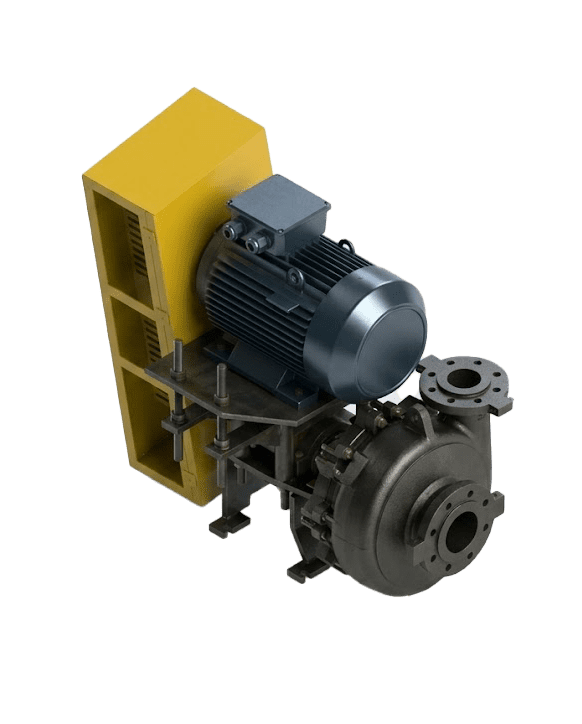

The dependable workhorse for transfer duties
Typical duties
MTM is typically selected for “everyday” slurry duties that still require serious wear resistance but do not demand the most extreme heavy-duty construction.
These circuits often run continuously and are sensitive to downtime, so maintainability and stable operation are central requirements.
Operators usually prefer a pump that can tolerate moderate variations in solids concentration without constant intervention.
The duty is often located in transfer services, auxiliary circuits, and areas where flow is steady rather than highly transient.
MTM is therefore a common choice for the following duty types.
These circuits often run continuously and are sensitive to downtime, so maintainability and stable operation are central requirements.
Operators usually prefer a pump that can tolerate moderate variations in solids concentration without constant intervention.
The duty is often located in transfer services, auxiliary circuits, and areas where flow is steady rather than highly transient.
MTM is therefore a common choice for the following duty types.
Balanced design for stable daily operation
Core design features
The MTM concept focuses on robustness without over-complexity, so the pump remains easy to operate and maintain across varied sites.
In medium-duty service, the best results usually come from a balanced hydraulic and mechanical design that stays stable as conditions change within a reasonable window.
The series is generally aimed at reducing “maintenance friction” by keeping service tasks predictable and repeatable.
It is also expected to integrate cleanly into typical plant layouts where space, lifting, and access are constrained.
As a result, the defining value is not a single feature, but a set of choices that keep operation steady and ownership cost controlled.
In medium-duty service, the best results usually come from a balanced hydraulic and mechanical design that stays stable as conditions change within a reasonable window.
The series is generally aimed at reducing “maintenance friction” by keeping service tasks predictable and repeatable.
It is also expected to integrate cleanly into typical plant layouts where space, lifting, and access are constrained.
As a result, the defining value is not a single feature, but a set of choices that keep operation steady and ownership cost controlled.
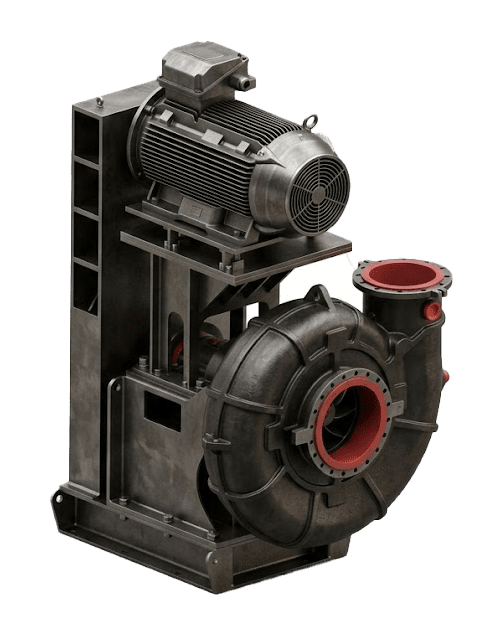
Straightforward wear strategy for medium abrasion
Wet-end & wear material options
Wear behavior is the first question in medium-duty slurry pumping, because it dictates maintenance interval, spares strategy, and operating cost.
MTM is commonly selected when the site wants a straightforward wear-part philosophy rather than switching between elastomer and metal sets across different circuits.
In practice, a consistent wear material approach simplifies inventory and reduces the chance of incorrect spares being fitted.
The wet-end selection should still consider particle shape, velocity, and slurry chemistry, because “medium duty” can become harsh if conditions drift.
The best outcomes come from matching the wet-end to the expected wear mode and then operating close to the intended duty window.
MTM is commonly selected when the site wants a straightforward wear-part philosophy rather than switching between elastomer and metal sets across different circuits.
In practice, a consistent wear material approach simplifies inventory and reduces the chance of incorrect spares being fitted.
The wet-end selection should still consider particle shape, velocity, and slurry chemistry, because “medium duty” can become harsh if conditions drift.
The best outcomes come from matching the wet-end to the expected wear mode and then operating close to the intended duty window.
Metallic wear-part philosophy | for predictable erosion/abrasion performance |
Consistent wear material selection to simplify spares and rebuild planning | to simplify spares and rebuild planning |
Wet-end selection | aligned with moderate abrasion and stable operating conditions |
Clear definition of the wear set in RFQ to lock spares, drawings, and QA scope | to lock spares, drawings, and QA scope |


Sealing aligned to dilution and practicality
Sealing options
Sealing choice is a process decision as much as a mechanical one, because it controls dilution water, housekeeping, and reliability.
Medium-duty circuits often have tighter water discipline than heavy-duty duties, especially where density control or downstream equipment is sensitive to added water.
Packing-based arrangements remain popular because they are tolerant of variability and can be maintained by standard plant crews.
Low-flow approaches are typically preferred when dilution must be limited, while full-flow approaches are used when flush stability is prioritized over added water.
Mechanical seals may be selected where leakage control, cleanliness, or water restrictions justify the added discipline and support practices.
Medium-duty circuits often have tighter water discipline than heavy-duty duties, especially where density control or downstream equipment is sensitive to added water.
Packing-based arrangements remain popular because they are tolerant of variability and can be maintained by standard plant crews.
Low-flow approaches are typically preferred when dilution must be limited, while full-flow approaches are used when flush stability is prioritized over added water.
Mechanical seals may be selected where leakage control, cleanliness, or water restrictions justify the added discipline and support practices.
FFL (Full Flow packing flush): | stable packing cooling/cleaning where dilution is acceptable |
LFL (Low Flow packing flush): | reduces dilution while keeping packing operation practical |
Mechanical seal (where applicable): | used where controlled leakage and water restrictions are key drivers |
Seal water availability and quality should be stated early, not assumed.
Predictable upkeep with simple routines
Maintenance & serviceability
Medium-duty pumps are often maintained on a planned rhythm, so the winning design is the one that makes routine service quick and repeatable.
MTM duties usually run long hours, meaning inspections must be simple and rebuild work should fit into normal shutdown windows.
Wear monitoring is typically done by tracking performance drift, vibration trends, and periodic visual checks during planned stops.
Good serviceability also depends on practical site details such as lifting points, base access, and the ease of swapping wet-end wear parts.
A disciplined spares strategy—matched to the duty window—usually does more for uptime than chasing marginal efficiency gains.
MTM duties usually run long hours, meaning inspections must be simple and rebuild work should fit into normal shutdown windows.
Wear monitoring is typically done by tracking performance drift, vibration trends, and periodic visual checks during planned stops.
Good serviceability also depends on practical site details such as lifting points, base access, and the ease of swapping wet-end wear parts.
A disciplined spares strategy—matched to the duty window—usually does more for uptime than chasing marginal efficiency gains.


Models & outline dimensions
MTM sizes cover common medium-duty connection ranges used in transfer and auxiliary services across mineral processing plants.
Outline dimensions are most useful during early layout, because they influence foundation footprint, access clearance, and lifting planning.
Weight is a practical planning parameter for maintenance handling and crane selection, especially in tight pump rooms.
These values should be treated as indicative for layout planning, while final GA drawings confirm exact installation details and interfaces.
Use the table below as a starting point for footprint planning and package coordination.
Outline dimensions are most useful during early layout, because they influence foundation footprint, access clearance, and lifting planning.
Weight is a practical planning parameter for maintenance handling and crane selection, especially in tight pump rooms.
These values should be treated as indicative for layout planning, while final GA drawings confirm exact installation details and interfaces.
Use the table below as a starting point for footprint planning and package coordination.

Model: | Inlet | Outlet | H | L | W | Total |
|---|---|---|---|---|---|---|
MTM 4/3 | 100 | 75 | 454 | 730 | 360 | 170 |
MTM 8/6 | 200 | 150 | 710 | 1073 | 545 | 525 |
MTM 10/8 | 250 | 200 | 885 | 1245 | 686 | 1095 |
MTM 12/10 | 300 | 250 | 1055 | 1483 | 830 | 1775 |
MTM 16/14 | 400 | 350 | 1250 | 1620 | 100 | 2105 |
MTM 20/18 | 500 | 450 | 1726 | 2180 | 110 | 5980 |
RFQ / sizing inputs
A correct MTM selection starts with the duty point, but it is finalized by understanding slurry behavior and the operating window.
Medium-duty services can become problematic if solids concentration, density, or suction conditions fluctuate beyond the intended range.
Medium-duty services can become problematic if solids concentration, density, or suction conditions fluctuate beyond the intended range.
For that reason, it is important to define not only the “normal” point, but also the likely high/low extremes and how often they occur.
Sealing and water discipline should be stated explicitly because they affect dilution, housekeeping, and reliability.
Sealing and water discipline should be stated explicitly because they affect dilution, housekeeping, and reliability.
Sealing and water discipline should be stated explicitly because they affect dilution, housekeeping, and reliability.
With the inputs below, the pump can be sized with realistic margins, and the final configuration can be locked for spares and maintainability.

