
BROCHURE
Contact YPT for a detailed information about YPT MT/MTR SERIES SLURRY PUMPS.
YPT Quality Management System
For detailed information about YPT Quality Management System
YPT POMPA Slurry Pumps Factory
For detailed information about YPT POMPA Slurry Pumps Factory
Heavy-duty slurry pumping, built for dynamic loads
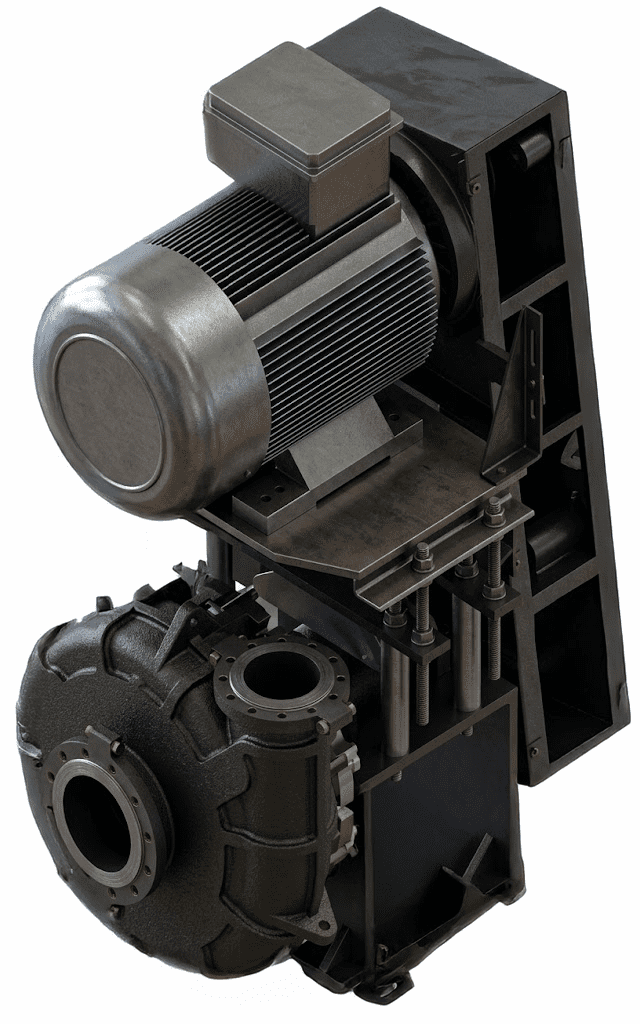
YPT MT/MTR SERIES — HEAVY-DUTY HORIZONTAL SLURRY PUMPS
The MT/MTR Series is a heavy-duty horizontal pump family developed for abrasive slurry handling where dynamic loading, duty stability, and maintenance practicality are key.
MT is the hard-metal version for severe erosion and higher energy density duties, while MTR is the rubber-lined counterpart used where elastomer wear behavior brings operational advantages.
In real plants, this series is often selected for services that experience pressure changes, solids swings, or frequent operational interventions such as valve throttling.
The platform approach helps standardize spares and operating practices across multiple circuits. Selection typically focuses on total cost of ownership, not just the initial duty point.
MT is the hard-metal version for severe erosion and higher energy density duties, while MTR is the rubber-lined counterpart used where elastomer wear behavior brings operational advantages.
In real plants, this series is often selected for services that experience pressure changes, solids swings, or frequent operational interventions such as valve throttling.
The platform approach helps standardize spares and operating practices across multiple circuits. Selection typically focuses on total cost of ownership, not just the initial duty point.
Heavy-duty performance for unstable slurry duties
Typical duties
MT/MTR pumps are chosen for heavy-duty services where abrasive wear is expected and operating conditions are not perfectly stable.
These duties often sit close to thickening and filtration, classification feed, or general in-plant slurry transfer where reliability matters more than squeezing out marginal efficiency.
These duties often sit close to thickening and filtration, classification feed, or general in-plant slurry transfer where reliability matters more than squeezing out marginal efficiency.


Many sites face intermittent density changes, startup transients, and frequent control actions that increase mechanical and hydraulic stress.
The series is therefore applied where a durable wet end and robust bearing support are required to keep performance predictable.
In practice, MT/MTR is used across mining, mineral processing, and multiple industrial slurry services.
The series is therefore applied where a durable wet end and robust bearing support are required to keep performance predictable.
In practice, MT/MTR is used across mining, mineral processing, and multiple industrial slurry services.
Built to tolerate load spikes and drift
Core design features
Heavy-duty slurry pumping is rarely gentle, so MT/MTR is built around mechanical stability under load rather than lightweight construction.
The platform targets duties where shaft loads, pressure fluctuations, and solids-driven imbalance can occur, so bearing capacity and contamination protection become central.
Operators also benefit from features that shorten planned downtime, because wear-part replacement is routine in abrasive circuits.
A practical pump in this class must tolerate real-world alignment, piping forces, and operational drift without becoming fragile or “tuning sensitive.”
For that reason, the series emphasizes robust construction and service-oriented details that keep rebuilds fast and repeatable.
The platform targets duties where shaft loads, pressure fluctuations, and solids-driven imbalance can occur, so bearing capacity and contamination protection become central.
Operators also benefit from features that shorten planned downtime, because wear-part replacement is routine in abrasive circuits.
A practical pump in this class must tolerate real-world alignment, piping forces, and operational drift without becoming fragile or “tuning sensitive.”
For that reason, the series emphasizes robust construction and service-oriented details that keep rebuilds fast and repeatable.

Metal or rubber wet-ends on one platform
Wet-end & wear material
Wear material selection is the first decision in abrasive pumping, because it controls maintenance interval, spares strategy, and the real operating cost of the pump.
The MT version follows a hard-metal wear philosophy and is typically selected where sharp particles, higher velocities, or severe erosion dominate.
The MTR version is rubber-lined and is commonly selected where elastomer wear behavior is advantageous and impact conditions are compatible with rubber linings.
Choosing between MT and MTR is not only about “abrasion severity,” but also about particle shape, operating speed, chemistry, and how stable the duty is over time.
The practical advantage of a paired family is that plants can keep a common platform mindset while selecting the wet-end wear path that best fits each circuit.
The MT version follows a hard-metal wear philosophy and is typically selected where sharp particles, higher velocities, or severe erosion dominate.
The MTR version is rubber-lined and is commonly selected where elastomer wear behavior is advantageous and impact conditions are compatible with rubber linings.
Choosing between MT and MTR is not only about “abrasion severity,” but also about particle shape, operating speed, chemistry, and how stable the duty is over time.
The practical advantage of a paired family is that plants can keep a common platform mindset while selecting the wet-end wear path that best fits each circuit.

Seal packages aligned with water discipline
Sealing
Sealing choice affects more than leakage; it controls dilution water balance, housekeeping, and reliability in abrasive service.
Many heavy-duty duties must balance the need for stable seal operation with process constraints that limit added water.
Packing-based arrangements are widely used because they are tolerant of operational variability and can be maintained with standard plant practices.
Low-flow concepts are often preferred when dilution must be reduced, while full-flow concepts are used when flushing stability is prioritized.
Mechanical seals can be applied where leakage control or water restrictions are dominant drivers, provided the duty conditions and maintenance discipline support them.
Many heavy-duty duties must balance the need for stable seal operation with process constraints that limit added water.
Packing-based arrangements are widely used because they are tolerant of operational variability and can be maintained with standard plant practices.
Low-flow concepts are often preferred when dilution must be reduced, while full-flow concepts are used when flushing stability is prioritized.
Mechanical seals can be applied where leakage control or water restrictions are dominant drivers, provided the duty conditions and maintenance discipline support them.
Service-ready design for routine wear work
Maintenance & serviceability
In abrasive duty, uptime is mainly protected by fast, repeatable maintenance rather than by trying to avoid wear altogether.
MT/MTR pumps are typically maintained on a wear-driven schedule, so service tasks must fit into normal shutdown windows without turning into long rebuild events.
The best results come when the site standardizes inspection triggers, spare wet-end kits, and a consistent rebuild procedure across sizes.
Maintenance planning should also include practical considerations such as lifting access, base alignment approach, and coupling guard removal sequence.
When the maintenance strategy is designed together with the selection, the pump becomes easier to run predictably and cheaper to own.
MT/MTR pumps are typically maintained on a wear-driven schedule, so service tasks must fit into normal shutdown windows without turning into long rebuild events.
The best results come when the site standardizes inspection triggers, spare wet-end kits, and a consistent rebuild procedure across sizes.
Maintenance planning should also include practical considerations such as lifting access, base alignment approach, and coupling guard removal sequence.
When the maintenance strategy is designed together with the selection, the pump becomes easier to run predictably and cheaper to own.

Models & outline dimensions
MT/MTR sizing typically begins with the duty point and solids behavior, then confirms the physical envelope for the pump room and maintenance access.
Dimensions (H–L–W) are most useful during early layout because they drive foundation footprint, coupling space, and safe service clearance.
Dimensions (H–L–W) are most useful during early layout because they drive foundation footprint, coupling space, and safe service clearance.

Weight is a practical planning parameter that affects crane selection and workshop handling, especially in heavy-duty circuits.
Because installation details can vary by baseplate, motor selection, and site standards, these values should be treated as indicative and confirmed on the final GA package.
Use the table below to start layout planning and equipment arrangement.
Because installation details can vary by baseplate, motor selection, and site standards, these values should be treated as indicative and confirmed on the final GA package.
Use the table below to start layout planning and equipment arrangement.
Model | Inlet | Outlet | H | L | W | Total |
|---|---|---|---|---|---|---|
MT 2/1.5 | 50 | 32 | 433 | 713 | 360 | 136 |
MT 3/2 | 75 | 50 | 438 | 734 | 360 | 161 |
MT 4/3 | 100 | 75 | 505 | 880 | 424 | 250 |
MT 6/4 | 150 | 100 | 630 | 1025 | 545 | 440 |
MT 8/6 | 200 | 150 | 855 | 1258 | 686 | 1010 |
MT 10/8 | 250 | 200 | 1030 | 1463 | 830 | 1660 |
MT 12/10 | 300 | 250 | 1150 | 1591 | 1000 | 1900 |
MTR 3/2 | 75 | 50 | 463 | 729 | 360 | 145 |
MTR 4/3 | 100 | 75 | 55 | 913 | 424 | 270 |
MTR 6/4 | 150 | 100 | 713 | 1097 | 545 | 510 |
MTR 8/6 | 200 | 150 | 965 | 1295 | 886 | 1065 |
RFQ / sizing inputs
A correct MT/MTR selection is finalized by understanding the operating window, not just the “single point” on paper.
Two services with the same head and flow can require different impeller choices, materials, and sealing because solids behavior and suction conditions vary widely.
Heavy-duty circuits can also include transients such as valve events, density swings, or intermittent operation that must be included in the selection basis.
If the duty is tied to filtration, thickening, or classification control, the pump must remain stable as process conditions drift.
Sending the inputs below helps lock the correct configuration quickly and reduces rework during project engineering.
