
BROCHURE
Contact YPT for a detailed information about YPT DK-AHM SERIES FROTH PUMPS.
YPT Quality Management System
For detailed information about YPT Quality Management System
YPT POMPA Slurry Pumps Factory
For detailed information about YPT POMPA Slurry Pumps Factory
Froth stability, upgraded for higher head duty
YPT DK-AHM SERIES — EXTRA HEAVY-DUTY FROTH PUMPS
The DK-AHM Series is built for froth duties that go beyond standard froth transfer and require higher head capability with stronger wear and structural margins.
It is typically selected when froth must be moved through longer lines, higher elevation changes, or more restrictive downstream routing.
The platform concept combines a froth-handling architecture with a heavy-duty slurry pump wet-end approach to keep operation stable under tough conditions.
In practice, it targets plants that want froth pumping reliability without sacrificing pressure capability.
Selection is driven by air fraction behavior, head requirement, and wear-life expectations.
It is typically selected when froth must be moved through longer lines, higher elevation changes, or more restrictive downstream routing.
The platform concept combines a froth-handling architecture with a heavy-duty slurry pump wet-end approach to keep operation stable under tough conditions.
In practice, it targets plants that want froth pumping reliability without sacrificing pressure capability.
Selection is driven by air fraction behavior, head requirement, and wear-life expectations.
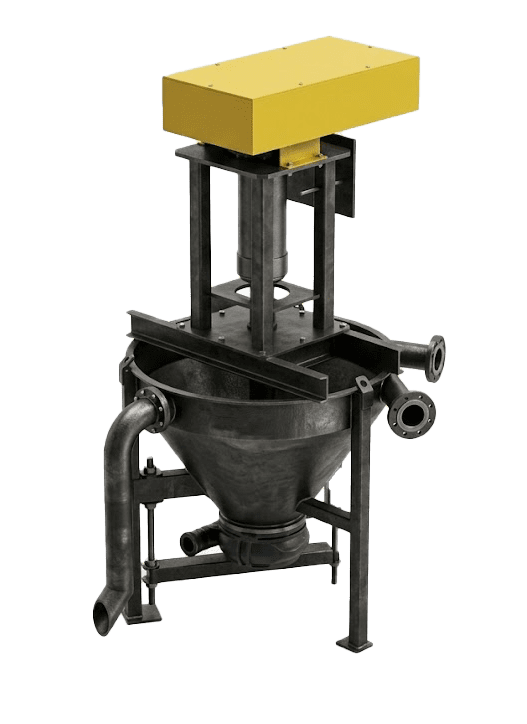
High-head froth transfer with real backpressure
Typical duties
DK-AHM is used when froth pumping becomes “pressure-critical” rather than purely “transfer-critical.” These duties appear when the froth stream must travel farther, climb elevation, or push through higher backpressure than usual.
In such cases, a standard froth pump may struggle to hold head consistently as aeration and density swing through the shift.
Plants also choose this series when the froth stream carries abrasive solids that accelerate wear and demand stronger wet-end durability.
The goal is to keep flotation transfer predictable while meeting a higher head requirement.
In such cases, a standard froth pump may struggle to hold head consistently as aeration and density swing through the shift.
Plants also choose this series when the froth stream carries abrasive solids that accelerate wear and demand stronger wet-end durability.
The goal is to keep flotation transfer predictable while meeting a higher head requirement.
Froth handling plus extra heavy-duty strength
Core design features
The DK-AHM concept focuses on combining froth-handling stability with extra heavy-duty mechanical robustness.
In flotation areas, the air fraction can vary quickly, so the pump must stay stable even when the feed behavior changes.
At the same time, higher head duty increases hydraulic loading and can amplify wear and vibration if the construction is not sufficiently robust.
DK-AHM is therefore positioned as a stronger-duty froth package that supports higher head operation with improved wear-life expectations.
The overall intent is predictable performance in difficult froth services where both air management and structural strength matter.
In flotation areas, the air fraction can vary quickly, so the pump must stay stable even when the feed behavior changes.
At the same time, higher head duty increases hydraulic loading and can amplify wear and vibration if the construction is not sufficiently robust.
DK-AHM is therefore positioned as a stronger-duty froth package that supports higher head operation with improved wear-life expectations.
The overall intent is predictable performance in difficult froth services where both air management and structural strength matter.

...
Air-managed flow with higher head capability
Principle of Operation
Froth pumping requires controlling a two-phase mixture of slurry and entrained air, and that air behavior is often the main reason conventional pumps become unstable.
The DK-AHM platform uses a froth-handling architecture intended to reduce the negative impact of air on pump performance. As air disengages or becomes less disruptive to the hydraulic passage, the pump can hold capacity more consistently instead of collapsing into air locking or rapid head loss.
This becomes even more important at higher head duties, where small disruptions can translate into noticeable flow instability.
The operating objective is a smoother transfer response when froth quality changes during normal flotation control actions.
The DK-AHM platform uses a froth-handling architecture intended to reduce the negative impact of air on pump performance. As air disengages or becomes less disruptive to the hydraulic passage, the pump can hold capacity more consistently instead of collapsing into air locking or rapid head loss.
This becomes even more important at higher head duties, where small disruptions can translate into noticeable flow instability.
The operating objective is a smoother transfer response when froth quality changes during normal flotation control actions.


Hard-metal durability for demanding froth duties
Wet-end & wear material
In higher head froth duty, wear is driven by abrasive solids, elevated velocities, and the turbulence behavior of aerated flow.
DK-AHM follows a hard-metal wear philosophy to support improved wear resistance in demanding applications.
This approach is typically favored when sharp particles and higher duty energy density make elastomer solutions less attractive.
A robust wear strategy also supports more stable performance over time, because excessive wear can shift the operating point and upset flotation transfer control.
The best outcomes come from matching the wet-end to slurry abrasiveness and then selecting speed and operating window to control erosion rate.
DK-AHM follows a hard-metal wear philosophy to support improved wear resistance in demanding applications.
This approach is typically favored when sharp particles and higher duty energy density make elastomer solutions less attractive.
A robust wear strategy also supports more stable performance over time, because excessive wear can shift the operating point and upset flotation transfer control.
The best outcomes come from matching the wet-end to slurry abrasiveness and then selecting speed and operating window to control erosion rate.
Sealing matched to flotation water discipline
Sealing
Sealing in froth applications must be treated as an operational discipline, not only a mechanical detail. Aerated froth can behave unpredictably at the seal interface, and flotation areas often have strict housekeeping and water-balance expectations.
For higher head froth duty, the sealing package must also tolerate higher pressure effects and the real-world variability of the froth stream.
The right choice depends on how sensitive the circuit is to added water, how stable the suction conditions are, and how the site prefers to maintain seals.
DK-AHM packages are typically configured with a sealing approach that aligns with flotation water discipline and the plant’s maintenance strategy.
For higher head froth duty, the sealing package must also tolerate higher pressure effects and the real-world variability of the froth stream.
The right choice depends on how sensitive the circuit is to added water, how stable the suction conditions are, and how the site prefers to maintain seals.
DK-AHM packages are typically configured with a sealing approach that aligns with flotation water discipline and the plant’s maintenance strategy.
Models & outline dimensions
DK-AHM installations should be planned with layout discipline because froth areas are tight, elevated, and sensitive to access and safety clearances.
Footprint and height influence not only civil/structural design, but also safe maintenance handling and splash containment.
Weight is critical for lifting plans, platform ratings, and workshop handling—especially in flotation buildings with limited crane access.
Tank volume matters because it relates to how the system buffers froth variability and supports stable operation at high capacity.
Use the table below as an early layout guide, then confirm final GA details during project engineering.
Footprint and height influence not only civil/structural design, but also safe maintenance handling and splash containment.
Weight is critical for lifting plans, platform ratings, and workshop handling—especially in flotation buildings with limited crane access.
Tank volume matters because it relates to how the system buffers froth variability and supports stable operation at high capacity.
Use the table below as an early layout guide, then confirm final GA details during project engineering.

Model: | Outlet | H | W = L | Total | Tank |
|---|---|---|---|---|---|
DK-AHM 6/4 | 100 | 3246 | 1765 | 2300 | 0,82 |
DK-AHM 8/6 | 150 | 4236 | 1850 | 3000 | 2,3 |
RFQ / sizing inputs
A DK-AHM selection must be based on both the duty point and the froth behavior across real operating scenarios.
Froth streams can vary with reagent dosing, froth depth, air rate, and upstream stability, so the pump must be sized for the operating range rather than a single “average” point.
Higher head duty also makes discharge line details more important because friction, elevation, and control valve behavior can dominate system stability.
It is valuable to define how often the duty swings and what the “worst moments” look like, because those are when air locking and instability risk are highest.
With complete inputs, the configuration can be locked faster for performance confirmation, wear strategy, and spares planning.