Where projects become execution-ready
YPT Front End Engineering Design (FEED)
Front End Engineering Design (FEED) is the critical phase that transforms a defined project concept into an execution-ready engineering baseline. This service bridges feasibility-level definition with full Detailed Engineering by establishing technical, commercial, and execution clarity. FEED enables reliable EPC or EPCM tendering by defining scope, interfaces, costs, and schedules with high confidence. Long-lead equipment requirements are identified early to protect project timelines. Through disciplined engineering and coordination, YPT ensures that projects enter execution with minimized uncertainty and controlled risk.
Complex Design
Material Integrity
Heavy performance
Speed, flexibility
Clarity before commitment
Process Definition & Design Basis
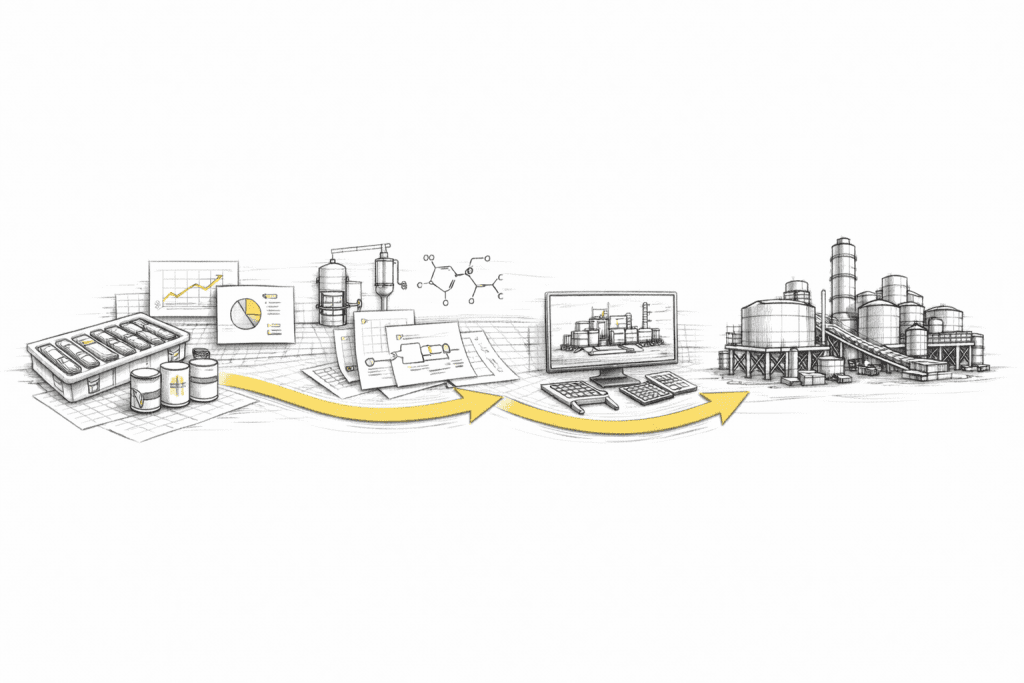
FEED begins with the confirmation and freezing of the design basis. Metallurgical assumptions, process selection, throughput targets, and recovery criteria are validated and documented. Design criteria are consolidated into a single, controlled reference for all disciplines. This alignment ensures consistency across engineering, procurement, and construction planning. A stable design basis prevents scope drift during execution.
Turning assumptions into engineered reality
Process Flow Diagrams & Mass Balances
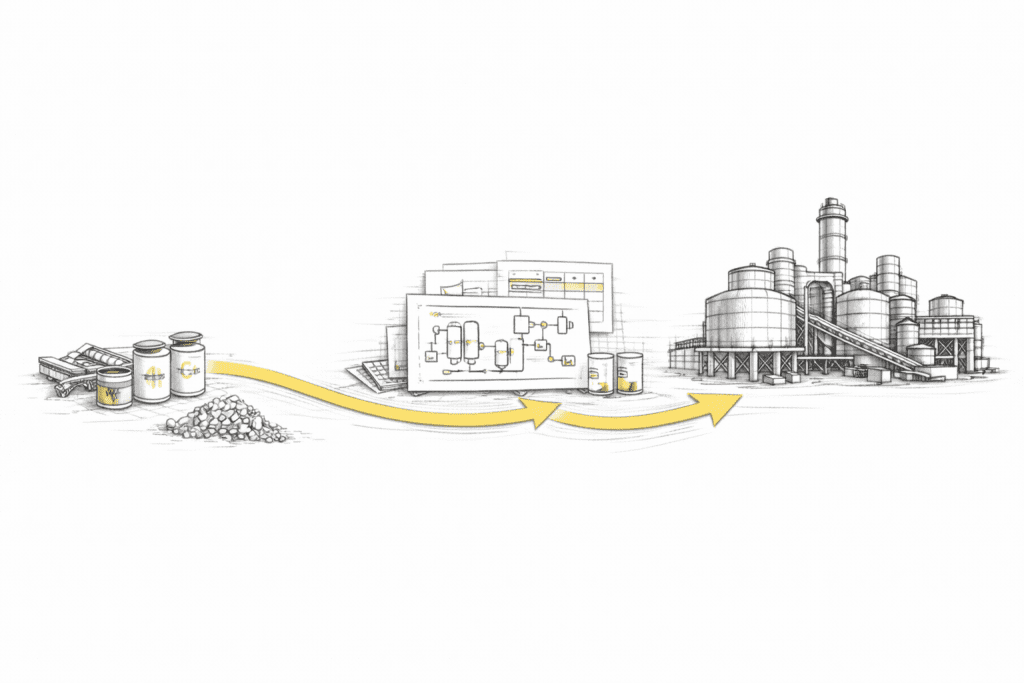
Process Flow Diagrams (PFDs) and mass balance models are developed to a level suitable for execution planning. Equipment capacities, stream properties, and operating envelopes are clearly defined. Energy and water balances are integrated to support utility design and infrastructure sizing. The outputs form the backbone of discipline engineering and cost estimation. These documents become controlled references throughout execution.
Building constructability into design
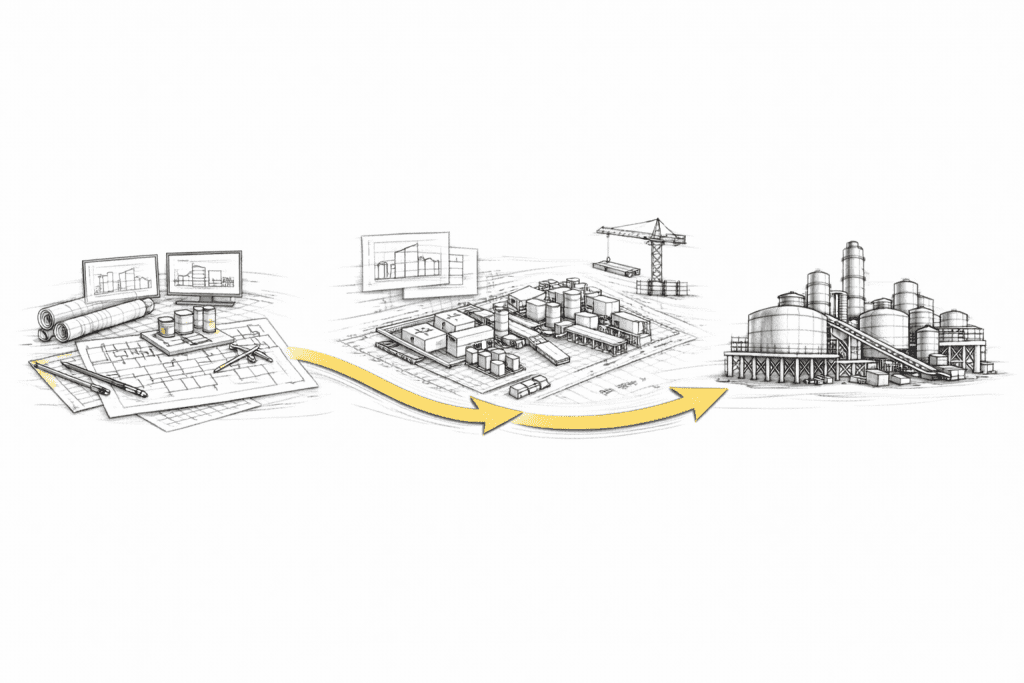
Layout Development & General Arrangement
Plant layouts and General Arrangement (GA) drawings are developed with a strong focus on constructability, operability, and maintenance access. Equipment positioning, material flow, and elevation philosophy are optimized early. Interfaces between process areas, utilities, and infrastructure are clearly defined. Construction sequencing and modularization opportunities are evaluated. This approach reduces installation risk and future operational constraints.
Defining what must be built and procured
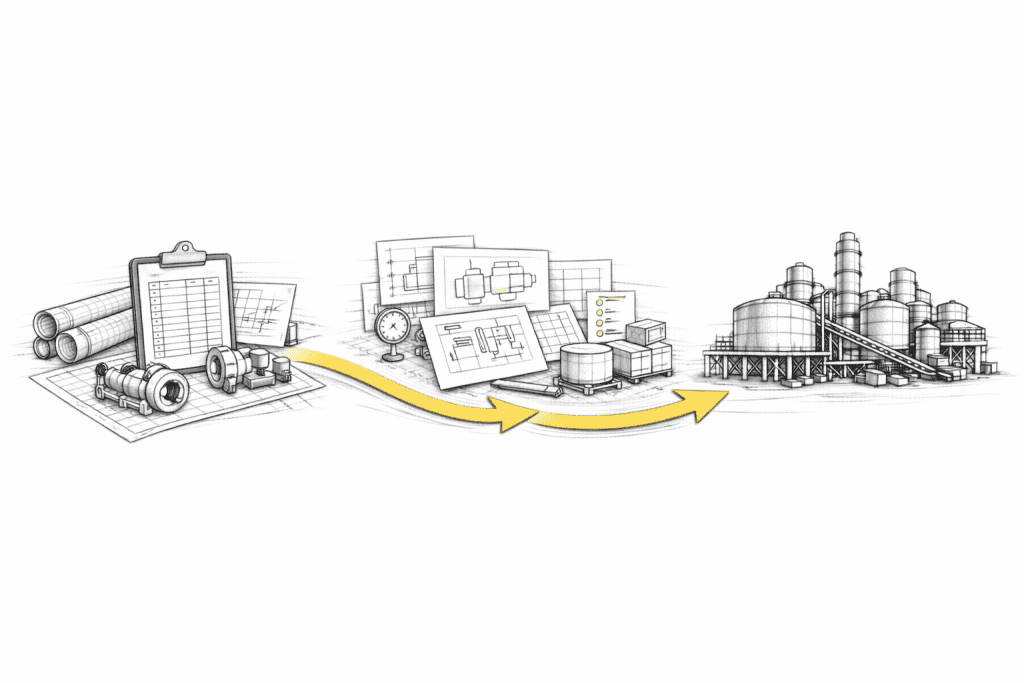
Equipment Lists & Technical Specifications
FEED establishes definitive equipment lists and preliminary technical specifications. Major mechanical equipment, packages, and bulk materials are identified with defined duty points and performance requirements. Vendor data requirements and technical evaluation criteria are prepared. This enables early market engagement and reliable pricing. Long-lead items are clearly flagged for early procurement action.
Confidence in cost and time
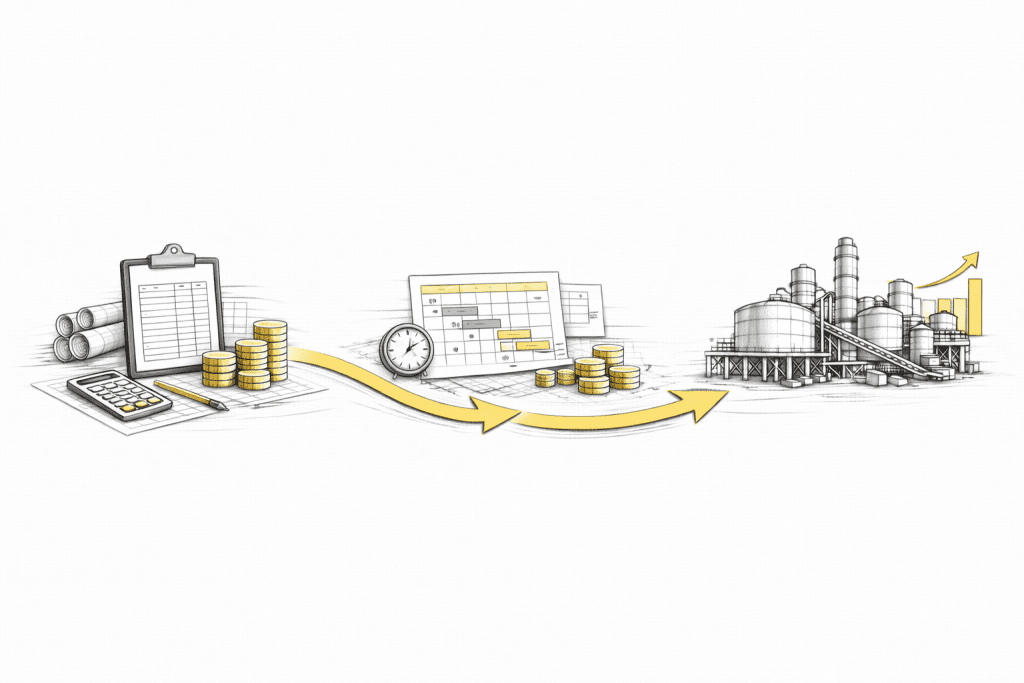
Cost Estimates & Schedule Baseline
Capital cost estimates are developed with significantly improved accuracy compared to feasibility studies. Quantities are derived from layouts, equipment lists, and discipline inputs. Project schedules are established with defined milestones and execution logic. Cost and schedule risks are identified and quantified. These baselines form the reference for EPC/EPCM contracts.
Anticipating risk before it becomes impact
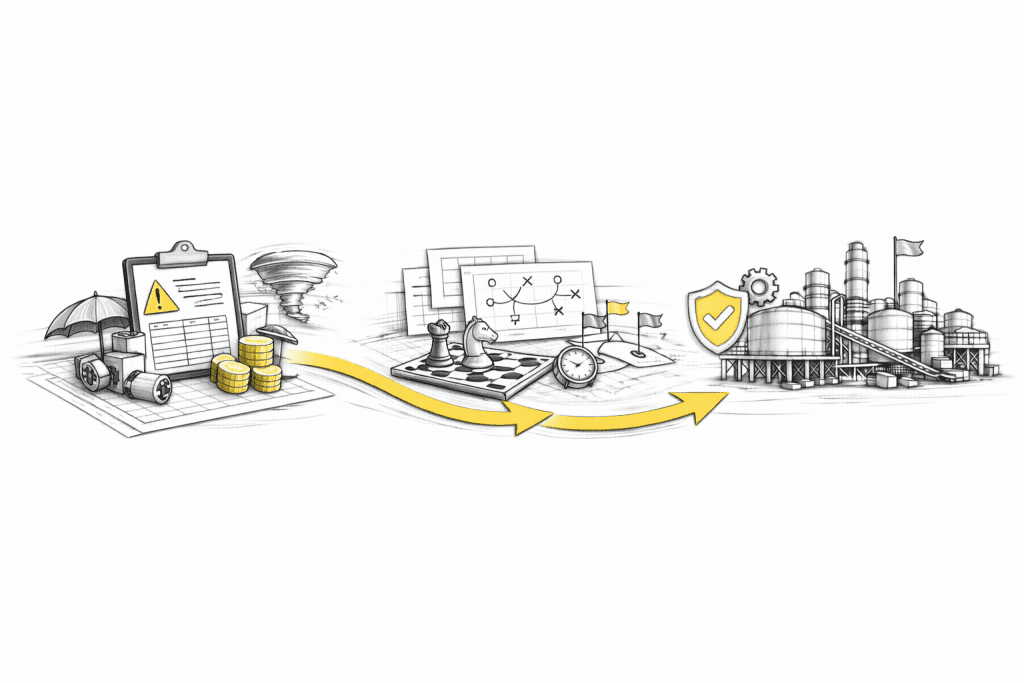
Risk Management & Execution Strategy
FEED includes structured identification and assessment of technical, commercial, and execution risks. Mitigation strategies are embedded into design, procurement, and construction planning. Contracting strategy, packaging philosophy, and interface management are defined. Health, safety, and environmental requirements are integrated into execution planning. This proactive approach protects project objectives.
Key Deliverables
Typical FEED deliverables include: